
THE DIGITAL TOOLS OF TEACHING BUSINESS AND ECONOMICS ENGLISH AT A UNIVERSITY
Аннотация
The rapid integration of digital technologies into higher education has significantly transformed the teaching of Business and Economics English at universities. Modern labor markets require graduates not only to possess linguistic knowledge but also to demonstrate professional communication skills in international business environments. This study examines the pedagogical role of digital tools in developing professional English competence among university students majoring in business and economics. The research focuses on online learning platforms, simulation-based learning, artificial intelligence (AI) tools, and blended learning models used in higher education. A qualitative pedagogical analysis was conducted to evaluate their instructional effectiveness. The findings indicate that digital tools enhance professional vocabulary acquisition, improve business communication skills, and increase learner engagement through interactive learning environments. The study concludes that systematic integration of digital technologies is essential for modernizing Business and Economics English instruction and preparing students for global professional communication.
Библиографические ссылки
1. Azizova, D. Imkoniyati Cheklangan O ‘quvchilarda Tabiatshunoslik Kompetensiyasini Shakllantirishning Pedagogik Shart-sharoitlari. Maktabgacha va Maktab Ta’limi Jurnali, 674388.
2. Chapelle, C. A. (2020). Computer-assisted language learning: Foundations for teaching and research. Cambridge University Press.
3. Dudeney, G., & Hockly, N. (2017). Digital literacies in language teaching. Routledge.
4. Godwin-Jones, R. (2018). Using mobile technology to develop language skills. Language Learning & Technology, 22(3), 3–17.
5. Hubbard, P. (2021). Technology and language teacher education. Annual Review of Applied Linguistics, 41, 1–18.
6. Kessler, G. (2018). Technology and the future of language teaching. Foreign Language Annals, 51(1), 205–218.
7. Luckin, R., Holmes, W., Griffiths, M., & Forcier, L. (2016). Intelligence unleashed: An argument for AI in education. Pearson.
8. Reinders, H., & White, C. (2016). Autonomy and technology in language learning. Language Learning & Technology, 20(2), 143–154.
9. Warschauer, M., & Liaw, M. L. (2019). Emerging technologies for autonomous language learning. Studies in Self-Access Learning Journal, 10(3), 295–310.
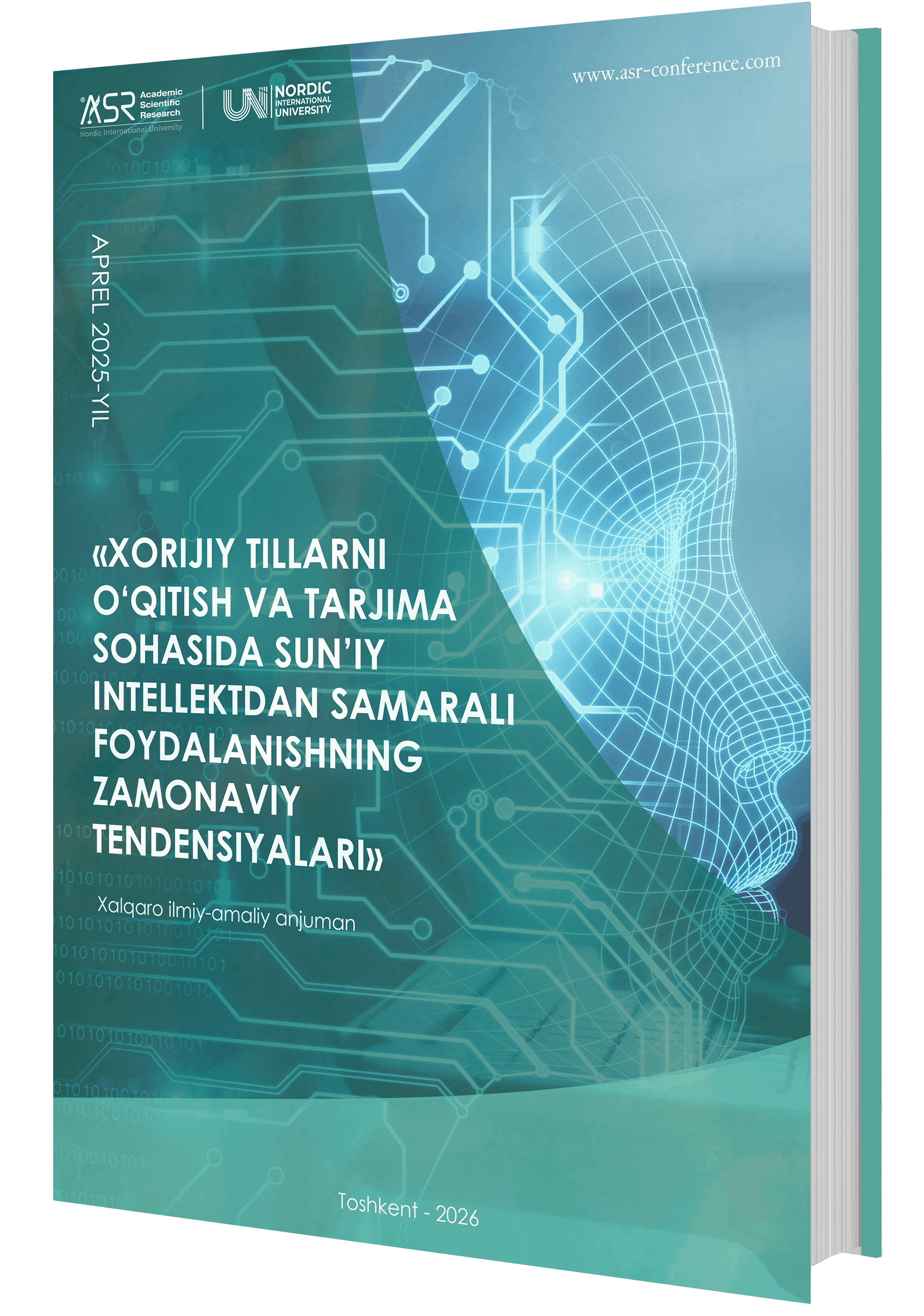
Загрузки
Опубликован
Выпуск
Раздел
Лицензия
Copyright (c) 2026 Durdona Azizova , Zarnigor Anesova

Это произведение доступно по лицензии Creative Commons «Attribution-NonCommercial» («Атрибуция — Некоммерческое использование») 4.0 Всемирная.
Условия лицензии
Эта работа доступна под лицензией Creative Commons Attribution-NonCommercial 4.0 International License. Чтобы просмотреть копию этой лицензии, посетите http://creativecommons.org/licenses/by-nc/4.0/ или отправьте письмо по адресу Creative Commons, PO Box 1866, Mountain View, CA 94042, США.
По этой лицензии вы можете:
Поделиться — копируйте и распространяйте материал на любом носителе и в любом формате.
Адаптируйте — делайте ремиксы, трансформируйте и дорабатывайте материал.
Лицензиар не может отозвать эти свободы, если вы соблюдаете условия лицензии. На следующих условиях:
Атрибуция. Вы должны указать соответствующую ссылку, предоставить ссылку на лицензию и указать, были ли внесены изменения. Вы можете сделать это любым разумным способом, но не таким образом, который бы предполагал, что лицензиар одобряет вас или ваше использование.
Некоммерческое использование — вы не имеете права использовать материал в коммерческих целях.
Никаких дополнительных ограничений. Вы не имеете права применять юридические условия или технологические меры, которые юридически запрещают другим делать все, что разрешено лицензией.