
THEORETICAL FOUNDATIONS AND CONCEPTUAL FRAMEWORKS FOR IMPLEMENTING ARTIFICIAL INTELEGENCE IN EDUCATION
Abstract
This article examines the theoretical foundations and conceptual frameworks for the implementation of artificial intelligence in the educational process. The relevance of this topic lies in the rapid development of digital technologies and their growing role in modern education. The study explores key learning theories and models that support the use of artificial intelligence in teaching and learning. It is argued that artificial intelligence can significantly improve the quality of education by providing personalized and adaptive learning experiences. The findings suggest that despite certain challenges, the integration of artificial intelligence has strong potential for the future of education.
References
1. Holmes, W., Bialik, M., & Fadel, C. (2019). Artificial intelligence in education: Promises and implications for teaching and learning. Center for Curriculum Redesign.
2. Kulik, J. A., & Fletcher, J. D. (2016). Effectiveness of intelligent tutoring systems. Review of Educational Research, 86(1), 42–78. https://doi.org/10.3102/0034654315581420
3. Luckin, R., Holmes, W., Griffiths, M., & Forcier, L. B. (2016). Intelligence unleashed: An argument for AI in education. Pearson.
4. Pane, J. F., Steiner, E. D., Baird, M. D., & Hamilton, L. S. (2017). Informing progress: Insights on personalized learning implementation and effects. RAND Corporation.
5. Piaget, J. (1970). Science of education and the psychology of the child. Orion Press.
6. Siemens, G. (2005). Connectivism: A learning theory for the digital age. International Journal of Instructional Technology and Distance Learning, 2(1), 3–10.
7. Siemens, G., & Long, P. (2011). Penetrating the fog: Analytics in learning and education. EDUCAUSE Review, 46(5), 30–32.
8. Skinner, B. F. (1954). The science of learning and the art of teaching. Harvard Educational Review, 24(2), 86–97.
9. VanLehn, K. (2011). The relative effectiveness of human tutoring, intelligent tutoring systems, and other tutoring systems. Educational Psychologist, 46(4), 197–221.
10. Williamson, B., & Eynon, R. (2020). Historical threads, missing links, and future directions in AI in education. Learning, Media and Technology, 45(3), 223–235.
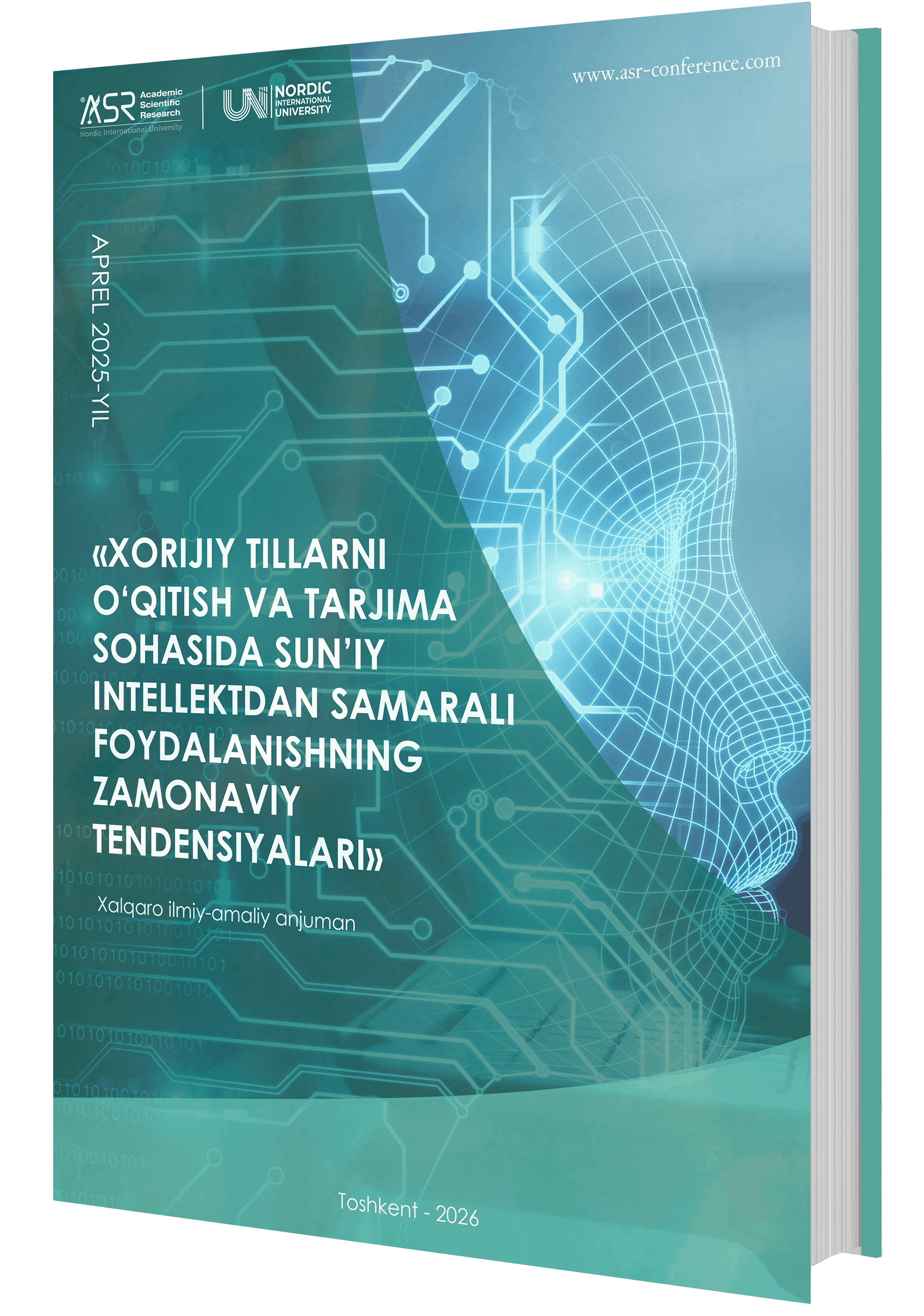
Downloads
Published
Issue
Section
License
Copyright (c) 2026 Dilnoza Sultanova , Ugiloy Kubaeva, Elvira Abdumalikova

This work is licensed under a Creative Commons Attribution-NonCommercial 4.0 International License.
Litsenziya shartlari
Bu ish Creative Commons Attribution-NoCommercial 4.0 xalqaro litsenziyasi ostida litsenziyalangan. Ushbu litsenziya nusxasini koʻrish uchun http://creativecommons.org/licenses/by-nc/4.0/ saytiga tashrif buyuring yoki Creative Commons, PO Box 1866, Mountain View, CA 94042, AQShga xat yuboring.
Ushbu litsenziyaga muvofiq, siz:
Ulashish — materialni istalgan vosita yoki formatda nusxalash va qayta tarqatish
Moslashtiring - remiks qiling, o'zgartiring va materialga asoslang
Litsenziya shartlariga rioya qilgan holda litsenziar ushbu erkinliklarni bekor qila olmaydi. Quyidagi shartlar asosida:
Atribut - Siz tegishli kredit berishingiz, litsenziyaga havolani taqdim etishingiz va o'zgartirishlar kiritilganligini ko'rsatishingiz kerak. Siz buni har qanday oqilona yo'l bilan qilishingiz mumkin, lekin litsenziar sizni yoki sizning foydalanishingizni ma'qullashini taklif qiladigan tarzda emas.
Notijorat - Siz materialdan tijorat maqsadlarida foydalana olmaysiz.
Hech qanday qo'shimcha cheklovlar yo'q - Siz boshqalarga litsenziya ruxsat bergan har qanday harakatni qonuniy ravishda cheklaydigan qonuniy shartlar yoki texnologik choralarni qo'llay olmaysiz.