
THE ROLE OF ARTIFICIAL INTELLIGENCE IN ENHANCING FOREIGN LANGUAGE TEACHING AND TRANSLATION
Abstract
This article explores the transformative impact of Artificial Intelligence (AI) on foreign language education and translation. By analyzing adaptive learning platforms and neural translation systems, the research highlights how AI personalizes instruction and improves linguistic accuracy. Findings suggest significant gains in learner engagement and translation efficiency, despite ongoing ethical challenges regarding cultural nuance and data privacy.
References
1. Amin, M. Y. M. (2023). AI and Chat GPT in language teaching: Enhancing EFL classroom support and transforming assessment techniques. International Journal of Higher Education Pedagogies, 4(4), 1–15. https://doi.org/10.33422/ijhep.v4i4.554
2. Elycheikh, A., Mitereva, S., & Ponce, M. L. (2025). Critical integration of generative AI in higher education: Cognitive, pedagogical and ethical perspectives. London Journal of Research in Humanities and Social Science, 25(13), 1–12.
3. Flückiger, A., et al. (2025). A comparison of translation performance between DeepL and Supertext. arXiv preprint. https://arxiv.org/abs/2502.02577
4. Iglesias, V. B., & Doğru, G. (2025). AI agents: An exploration of machine translation quality and costs. arXiv preprint. https://arxiv.org/abs/2505.01560
5. Katiyar, N., et al. (2024). AI‑driven personalized learning systems: Enhancing educational effectiveness. ResearchGate.
6. Liu, L. (2024). Impact of AI gamification on EFL learning outcomes and nonlinear dynamic motivation. ResearchGate.
7. Vornachev, A., et al. (2024). Is artificial intelligence a utopia or the future of foreign language learning? Arab World English Journal (AWEJ).
8. Yin, H., & Chen, Y. (2025). Ethical implications and pedagogical efficacy of AI‑driven neural machine translation in ESL instruction. Proceedings of ITEL 2025, 1–10.
9. Yuan, H. (2025). Artificial intelligence in language learning: Biometric feedback and adaptive reading. Humanities and Social Sciences Communications, 12, Article 556. https://doi.org/10.1057/s41599-025-04878-w
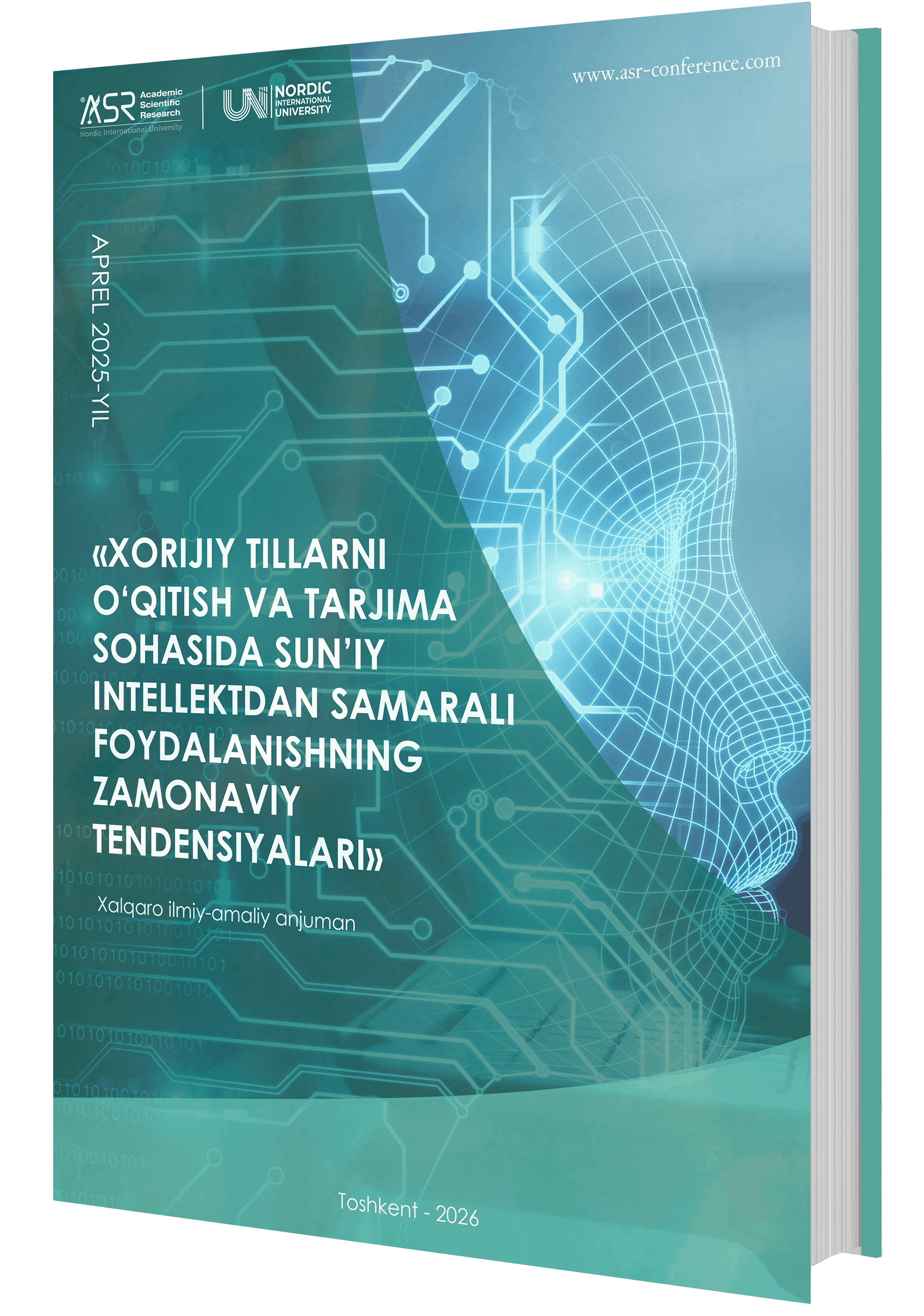
Downloads
Published
Issue
Section
License
Copyright (c) 2026 Sevinch Kugunbayeva

This work is licensed under a Creative Commons Attribution-NonCommercial 4.0 International License.
Litsenziya shartlari
Bu ish Creative Commons Attribution-NoCommercial 4.0 xalqaro litsenziyasi ostida litsenziyalangan. Ushbu litsenziya nusxasini koʻrish uchun http://creativecommons.org/licenses/by-nc/4.0/ saytiga tashrif buyuring yoki Creative Commons, PO Box 1866, Mountain View, CA 94042, AQShga xat yuboring.
Ushbu litsenziyaga muvofiq, siz:
Ulashish — materialni istalgan vosita yoki formatda nusxalash va qayta tarqatish
Moslashtiring - remiks qiling, o'zgartiring va materialga asoslang
Litsenziya shartlariga rioya qilgan holda litsenziar ushbu erkinliklarni bekor qila olmaydi. Quyidagi shartlar asosida:
Atribut - Siz tegishli kredit berishingiz, litsenziyaga havolani taqdim etishingiz va o'zgartirishlar kiritilganligini ko'rsatishingiz kerak. Siz buni har qanday oqilona yo'l bilan qilishingiz mumkin, lekin litsenziar sizni yoki sizning foydalanishingizni ma'qullashini taklif qiladigan tarzda emas.
Notijorat - Siz materialdan tijorat maqsadlarida foydalana olmaysiz.
Hech qanday qo'shimcha cheklovlar yo'q - Siz boshqalarga litsenziya ruxsat bergan har qanday harakatni qonuniy ravishda cheklaydigan qonuniy shartlar yoki texnologik choralarni qo'llay olmaysiz.