
DEVELOPING ENGLISH TERMINOLOGICAL COMPETENCE FOR AGRARIAN SPECIALISTS
Abstract
In the context of globalization and the growing importance of international cooperation in the agrarian sector, the ability of specialists to master English terminology has become a key professional requirement. This paper examines the significance of English terminological competence for agrarian specialists, identifies challenges in acquiring subject-specific vocabulary, and proposes effective methods for developing this competence within professional education. The findings highlight the role of specialized courses, digital resources, and context-based learning strategies in ensuring high levels of terminological proficiency among future agrarian professionals.
References
Coyle, D., Hood, P., & Marsh, D. (2010). CLIL: Content and Language Integrated Learning. Cambridge University Press.
Dudley-Evans, T., & St John, M. J. (1998). Developments in English for Specific Purposes: A Multi-Disciplinary Approach. Cambridge University Press.
FAO. (2023). AGROVOC Multilingual Thesaurus. Retrieved from http://www.fao.org/agrovoc.
Hutchinson, T., & Waters, A. (1987). English for Specific Purposes: A Learning-Centered Approach. Cambridge University Press.
Richards, J. C. (2015). Key Issues in Language Teaching. Cambridge University Press.
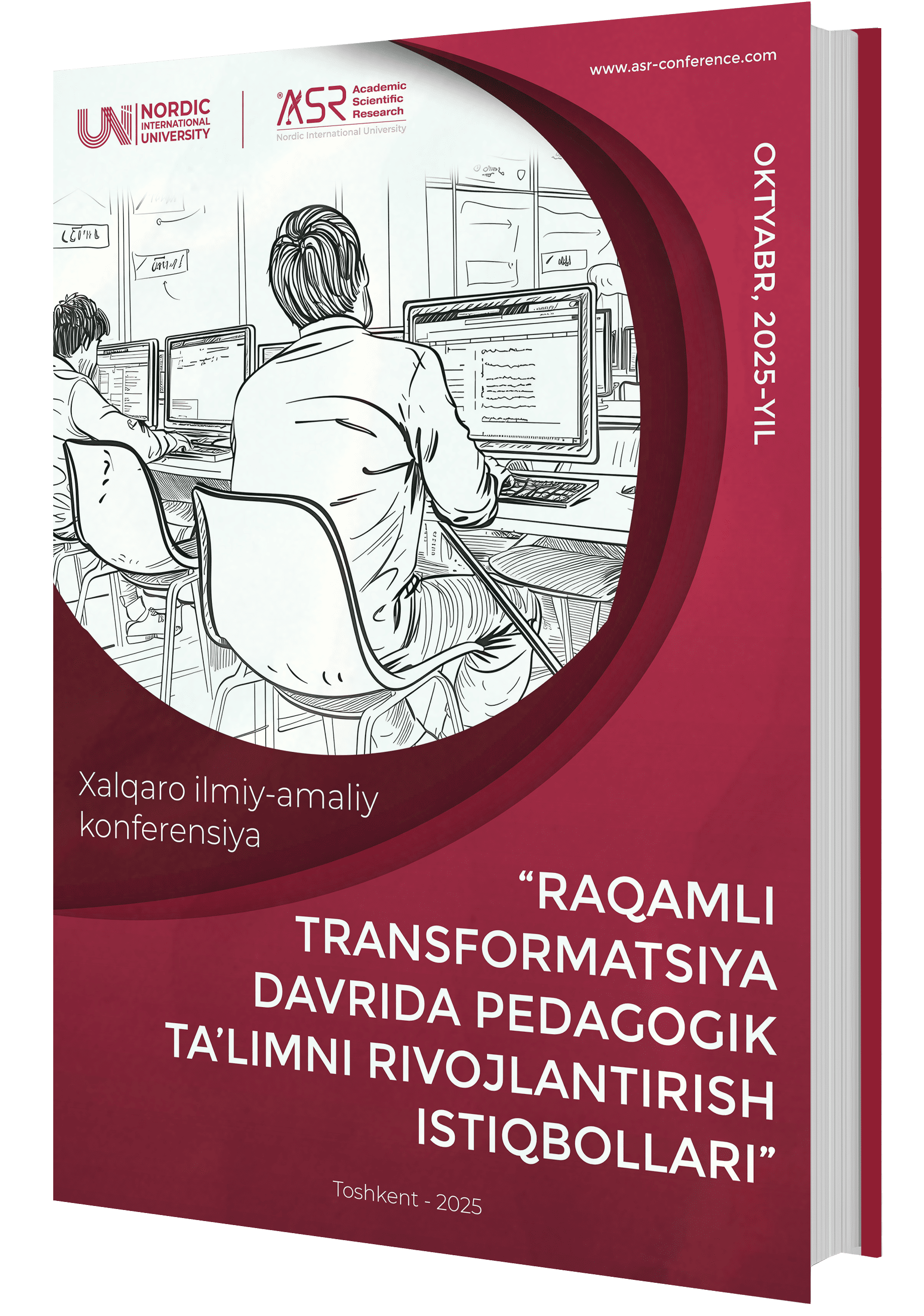
Downloads
Published
Issue
Section
License
Copyright (c) 2025 Manzura Tahirova

This work is licensed under a Creative Commons Attribution-NonCommercial 4.0 International License.
Litsenziya shartlari
Bu ish Creative Commons Attribution-NoCommercial 4.0 xalqaro litsenziyasi ostida litsenziyalangan. Ushbu litsenziya nusxasini koʻrish uchun http://creativecommons.org/licenses/by-nc/4.0/ saytiga tashrif buyuring yoki Creative Commons, PO Box 1866, Mountain View, CA 94042, AQShga xat yuboring.
Ushbu litsenziyaga muvofiq, siz:
Ulashish — materialni istalgan vosita yoki formatda nusxalash va qayta tarqatish
Moslashtiring - remiks qiling, o'zgartiring va materialga asoslang
Litsenziya shartlariga rioya qilgan holda litsenziar ushbu erkinliklarni bekor qila olmaydi. Quyidagi shartlar asosida:
Atribut - Siz tegishli kredit berishingiz, litsenziyaga havolani taqdim etishingiz va o'zgartirishlar kiritilganligini ko'rsatishingiz kerak. Siz buni har qanday oqilona yo'l bilan qilishingiz mumkin, lekin litsenziar sizni yoki sizning foydalanishingizni ma'qullashini taklif qiladigan tarzda emas.
Notijorat - Siz materialdan tijorat maqsadlarida foydalana olmaysiz.
Hech qanday qo'shimcha cheklovlar yo'q - Siz boshqalarga litsenziya ruxsat bergan har qanday harakatni qonuniy ravishda cheklaydigan qonuniy shartlar yoki texnologik choralarni qo'llay olmaysiz.